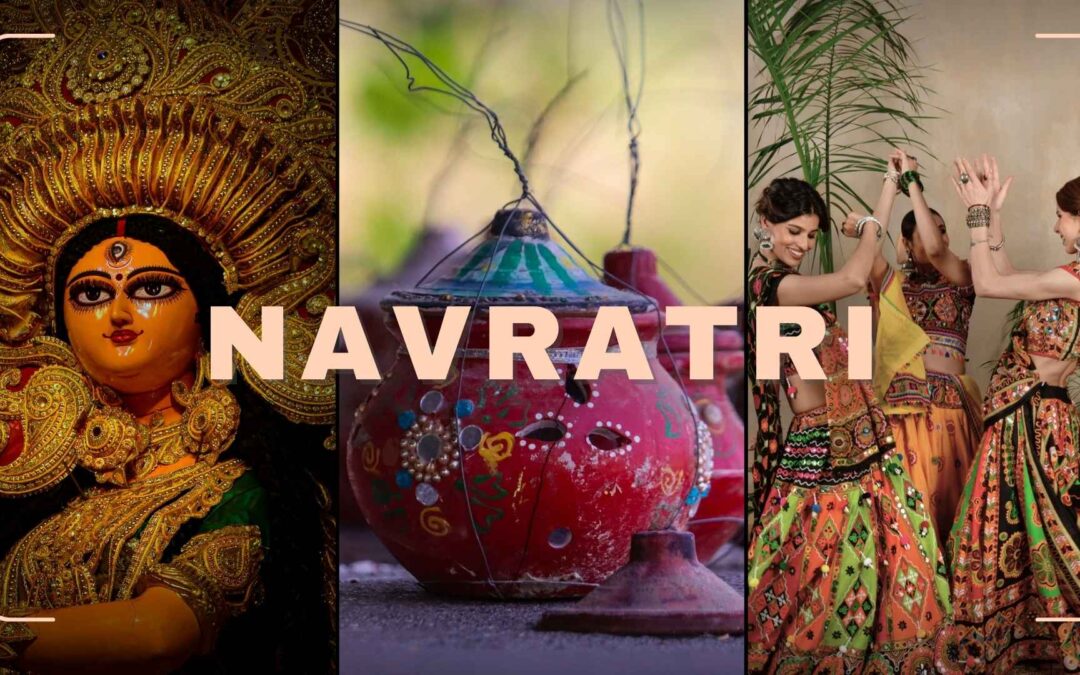
Derived from the Sanskrit words nava (nine) and ratri (night), Navratri is a vibrant nine-night festival dedicated to honouring Goddess Durga and the divine feminine energy known as Shakti.
This multi-day celebration spans nine nights because each evening pays homage to one of the deity's nine distinct manifestations, collectively revered as the Navadurga.
Although the core rituals unfold over nine nights, the festivities culminate on the tenth day with Dussehra—one of Hinduism's most significant festivals, which glorifies the ultimate triumph of good over evil.
Garba – The Way Navratri is Celebrated
What makes Navratri one of India’s most radiant and eagerly anticipated celebrations is the sheer magic of how it unfolds.
At the pulsating heart of this festival is Garba, a term that carries a beautiful duality of meaning:
The Sacred Essence: Etymologically rooted in the Sanskrit word Garbha, meaning "womb," it honors the primal source of life, fertility, and cosmic creation.
The Living Ritual: Universally, it translates into the mesmerizing traditional folk dance where devotees move in concentric circles around a sacred earthen pot.
As twilight falls on each of the nine nights, the dance floor becomes a canvas of devotion dedicated to the Navadurga and the supreme divine feminine (Shakti).
Swirling around a softly lit clay lantern—the Garbha Deep—dancers pay homage to the spark of life and the human soul. Every rhythmic, sweeping rotation serves as a powerful reminder of cyclical time, spinning beautifully around the Goddess, who remains the universe's eternal, unchanging center.
Navadurga – Significance, Meaning and Manifestations of Goddess Durga
Navadurga, meaning the nine forms of Durga, represents nine manifestations of the Divine Feminine worshipped during the nine nights of Navratri. Each form embodies a distinct aspect of Shakti—from strength, devotion and courage to compassion, wisdom, transformation and spiritual fulfilment.
Maa Shailputri — The Daughter of the Mountains
Worshipped on the first day of Navratri, Maa Shailputri represents strength, stability and purity of purpose. As the daughter of the Himalayas and a manifestation of Parvati, she reminds us to remain grounded and steadfast as we begin our journey.
Maa Brahmacharini — The Embodiment of Devotion
The second form, Maa Brahmacharini, represents devotion, determination, discipline and penance. She symbolises the inner strength required to remain committed to one's path even when the journey demands patience and perseverance.
Maa Chandraghanta — The Symbol of Courage
Maa Chandraghanta, worshipped on the third day, represents courage, protection and the power to overcome fear. Her name refers to the crescent moon adorning her forehead, while her fierce yet benevolent form reflects the balance between peace and the strength to confront adversity.
Maa Kushmanda — The Source of Cosmic Creation
Maa Kushmanda is worshipped on the fourth day and is associated with creation, vitality and cosmic energy. She is traditionally believed to have created the cosmic universe through her divine smile, symbolising the creative power and life-giving energy of Shakti.
Maa Skandamata — The Divine Mother
The fifth form, Maa Skandamata, represents motherhood, compassion, nurturing and unconditional love. As the mother of Skanda (Kartikeya), she reminds us of the protective and nurturing dimension of the Divine Feminine.
Maa Katyayani — The Warrior Goddess
Maa Katyayani, worshipped on the sixth day, embodies courage, strength and the determination to overcome evil. Her warrior form represents the power to stand against injustice and protect righteousness.
Maa Kalaratri — The Destroyer of Darkness
The seventh manifestation, Maa Kalaratri, is the fierce form of Shakti associated with the destruction of darkness, fear and negative forces. Though formidable in appearance, she is regarded as a protective mother who guides devotees through fear and towards light.
Maa Mahagauri — The Embodiment of Purity
Maa Mahagauri, worshipped on the eighth day, represents purity, serenity, peace and spiritual transformation. Her radiant form symbolises the cleansing of the mind and spirit and the emergence of inner clarity.
Maa Siddhidatri — The Giver of Spiritual Fulfilment
The ninth and final form, Maa Siddhidatri, represents wisdom, spiritual attainment and fulfilment. She symbolises the culmination of the Navratri journey—the awakening of one's higher potential and the attainment of inner completeness.
Together, the Navadurga represent the many dimensions of Shakti. From the grounded strength of Shailputri to the spiritual fulfilment of Siddhidatri, the nine forms offer a profound journey through the different expressions of the Divine Feminine.
The Nine Colours of Navratri – Significance and Tradition
During Navratri, each of the nine days is traditionally associated with a particular colour, and devotees often wear clothing in that day's colour. The colours add to the vibrancy of the festival while symbolising different qualities and moods associated with Shakti, devotion and spiritual renewal.
How is the Colour Sequence Decided?
Unlike the Navadurga, whose sequence remains traditionally associated with the nine days, the Navratri colour sequence changes each year. The first day's colour is determined by the weekday on which Navratri begins, and the colours for the following days follow a prescribed seven-day cycle.
This is why the colour associated with a particular day of Navratri can be different from one year to another.
The Nine Colours of Navratri
Day 1 — Orange 🧡
Orange represents energy, enthusiasm, warmth and optimism. Beginning Navratri with this vibrant colour reflects the awakening of Shakti and the joyful energy with which devotees embark upon the nine-day celebration.
Day 2 — White 🤍
White symbolises purity, peace, serenity and spiritual clarity. It represents the calming and cleansing aspect of the Divine Feminine and encourages devotees to turn inward with a peaceful mind.
Day 3 — Red ❤️
Red is associated with strength, passion, courage and power. As a colour strongly connected with Shakti and Goddess Durga, it reflects the dynamic and protective energy of the Divine Feminine.
Day 4 — Royal Blue 💙
Royal blue represents depth, dignity, stability and inner strength. Its rich colour evokes the vastness of the universe and the profound nature of divine consciousness.
Day 5 — Yellow 💛
Yellow symbolises happiness, knowledge, optimism and prosperity. Its brightness reflects the warmth and nurturing energy associated with the Divine Mother and the joy of celebration.
Day 6 — Green 💚
Green represents growth, harmony, renewal and abundance. It evokes nature and the life-giving aspect of Shakti, reminding us of the continuous cycle of growth and transformation.
Day 7 — Grey 🩶
Grey symbolises balance, composure and strength amidst uncertainty. Its understated character can be seen as a reminder that inner strength does not always need to be outwardly dramatic.
Day 8 — Purple 💜
Purple is associated with spirituality, wisdom, dignity and transformation. As Navratri approaches its culmination, the colour reflects the deeper spiritual dimension of the festival and the journey towards inner awakening.
Day 9 — Peacock Green 🦚
Peacock green, with its rich blend of blue and green, represents beauty, grace, individuality and renewal. It brings the nine-day celebration to a vibrant conclusion, symbolising the flourishing of Shakti and the fulfilment of the spiritual journey.
A Celebration in Colour
The colours of Navratri transform streets, homes, temples and celebrations into a vibrant tapestry of devotion and joy. Wearing the colour of the day is more than a fashion tradition—it has become a beautiful contemporary expression of participation, community and celebration during India's much-loved festival of Shakti.
Social significance of Navratri in India
Navratri stands as one of India's most highly anticipated annual celebrations, largely due to the profound sense of community it fosters.
While families routinely observe quiet morning and evening prayers within the sanctity of their homes, the nights transform neighbourhoods into vibrant hubs of collective joy.
Central to this festive spirit are the massive Garba and Dandiya Raas events organized across the nation.
These rhythmic, high-energy folk dances create a powerful social equalizer. Every evening, children, parents, and grandparents alike dress in intricately embroidered, colourful traditional attire to join synchronised, circular dances honouring the nine forms of the Goddess Durga.
By bringing people of all generations and backgrounds together under the shared banner of music and movement, Navratri breaks down daily routines and reinforces a deep sense of societal belonging and mutual goodwill.
Beyond its lively communal aspects, the core theological essence of Navratri centers on the worship of Shakti—the divine feminine energy. By placing female divinity at the absolute heart of the festivities, the celebration provides a culturally resonant platform to advocate for gender equality, emphasize mutual respect among all genders, and actively renew a societal commitment to safeguarding the dignity and rights of women.